


What is Vacuum Casting: A Latest Process Guide
Vacuum casting, a key process in plastic parts manufacturing, is ideal for small-batch polyurethane parts production due to its high efficiency and speed. This technology is particularly outstanding in product prototyping, enabling manufacturers to effectively conduct market validation and demand assessment before large-scale production.
This article aims to answer the question, "What is vacuum casting?" We will explore various aspects of polyurethane and silicone casting processes, including their applications, materials used, advantages, and limitations.
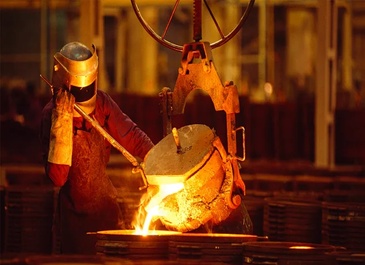
What is Vacuum Casting or Polyurethane Casting?
Vacuum casting (also known as polyurethane casting) is a precision manufacturing process that injects liquid polyurethane material into a mold in a vacuum environment. This process effectively eliminates air bubbles in the material and mold cavity through vacuum negative pressure, resulting in high-quality parts with smooth surfaces, dense internal structures, and complete internal structures. It is particularly suitable for small-batch production of functional prototypes, rapid mold making, and precision engineering components, and is widely used in the product development stages of industries such as automotive, electronics, medical, and consumer goods. It can achieve near-final product performance in a short time and at a low cost, making it one of the key technologies bridging design and mass production.
Vacuum Casting Process: Step-by-Step Explanation
Vacuum casting is a precision manufacturing process that involves pouring materials in a vacuum environment. It is primarily used to produce high-quality, bubble-free plastic or polyurethane parts. Below is a complete step-by-step explanation of the process:
Prototype and Mold Preparation
Prototype Creation: Create a high-precision master mold using 3D printing, CNC machining, or existing materials.
Mold Material Selection: Silicone (such as RTV silicone) is typically used to create a flexible mold.
Prototype Pretreatment: Clean the prototype surface and apply a release agent if necessary.
Silicone Mold Creation
Silicone Preparation: Mix the silicone and curing agent in a precise ratio.
Vacuum Degassing: Place the mixed silicone in a vacuum chamber and remove air bubbles introduced by stirring (approximately 5-10 minutes, until no obvious bubbles remain). (Escape)
Pouring Silicone: Slowly pour the degassed silicone into the mold containing the prototype.
Secondary Degasing: Place the entire mold in a vacuum chamber and evacuate again to eliminate any residual air bubbles inside the mold.
Curing: Allow to cure at room temperature or under heating (usually 6-24 hours).
Casting Material Preparation
Material Selection: Select polyurethane (PU), epoxy resin, or transparent resin, etc., according to requirements.
Precise Proportioning: Mix the resin and curing agent according to the manufacturer's instructions.
Vacuum Degassing: Perform vacuum degassing on the mixed casting material to remove dissolved gases.
Vacuum Casting Process
Mold Pre-treatment: Clean the mold cavity, and spray release agent if necessary.
Mold Fixing: Place the silicone mold into the vacuum casting machine and seal it.
Vacuuming:Reduce the vacuum chamber pressure to 0.1-0.5 mbar.
Maintain the vacuum state to allow the gas in the mold cavity to be fully expelled.
Material Injection:
Slowy inject the degassed material into the mold under vacuum.
Use the pressure difference to completely fill the details of the cavity.
Vacuum Release: Slowly release the vacuum, using atmospheric pressure to assist in material compaction.
Curing and Post-treatment
Preliminary Curing: In the mold... Let the material stand in the mold until it initially hardens (time depends on material type).
Demolding: Carefully remove the casting to avoid damage.
Post-curing: Some materials require post-curing to achieve optimal performance.
Post-processing: Remove runners and flash, perform surface treatments such as sanding and spraying.
Quality Control
Check surface finish and detail reproducibility.
Measure critical dimensional accuracy.
Perform mechanical property testing if necessary.
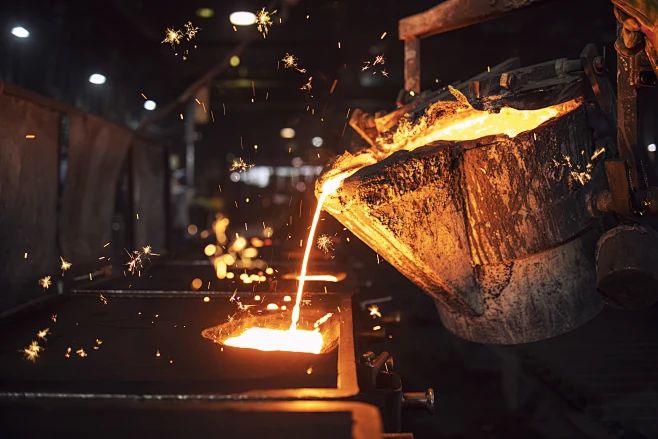
Comparison of Vacuum Casting with Other Manufacturing Processes
When choosing a plastic manufacturing process, vacuum casting, injection molding, and 3D printing each have their own characteristics and are suitable for different production needs. The following is a brief comparison of these three processes to help you make a more informed decision.
Vacuum Casting vs. Injection Molding
Injection molding uses high pressure to inject molten material into a metal mold, suitable for mass production, with low unit cost and high production efficiency, but the initial cost of the metal mold is high and the production cycle is long. In contrast, vacuum casting uses silicone molds, significantly reducing upfront costs, and offering faster mold making, making it more suitable for small-batch production or product development stages, and providing greater flexibility and economy during design iterations.
3D printing, as an additive manufacturing technology, eliminates the need for molds, allowing for the direct fabrication of parts from digital models. It is particularly suitable for complex structures, customized products, and prototype verification. While production efficiency is lower and material selection is limited, its moldless nature offers significant advantages in scenarios with frequent iterations or very small production runs.
In summary, vacuum casting is an option for low-cost prototyping and small-to-medium batch production; injection molding is more economical for large-scale mass production; and 3D printing is the ideal choice for rapid design verification or manufacturing of complex customized parts. You can make a comprehensive evaluation based on your product stage, quantity requirements, cost budget, and time constraints.
Choose WSRCNC, choose a reliable vacuum casting partner.
In the field of precision manufacturing, process selection directly impacts product success. Whether you are conducting prototype verification, small-batch production, or customized manufacturing, WSRCNC remains your trusted vacuum casting solution provider.
Our Core Values:
Professional Process Guarantee: Utilizing advanced vacuum casting technology, we ensure dense, bubble-free parts with precise detail reproduction.
Flexible Production Adaptation: Providing cost-effective end-to-end services from single-piece prototypes to small-batch production.
Rapid Response: Short silicone mold production cycles accelerate your product launch.
Continuous Quality Control: Strict adherence to standardized operating procedures ensures consistency across every batch.
Why Choose Us?
When facing process decisions—whether it's rapid validation with 3D printing, detailed prototyping with vacuum casting, or large-scale production with injection molding—WSRCNC offers professional technical consulting and manufacturing services. We not only provide advanced vacuum casting solutions but also help you optimize your product development path, finding the optimal balance between quality, cost, and timeliness.
Let WSRCNC be your trusted partner from concept to reality. With technology as our foundation and quality as our commitment, we help your innovations take root faster and move forward more steadily.


