


What is CNC Gear Machining? Gear Manufacturing Processes, Materials, and Applications
In the field of mechanical transmission, gears are the core components for power transmission, and their machining quality directly impacts equipment performance and service life. This article provides an in-depth analysis of various aspects of gear machining, including working principles, processes, material selection, and cost analysis, to help you gain a comprehensive understanding of this critical manufacturing process.
What is Gear Machining?
Gear machining is a precision forming process in the field of mechanical manufacturing. It involves the use of specialized machining equipment and tools to accurately process metal blanks or other engineering materials into gear components with specific tooth profiles, accuracy requirements, and transmission functions. This process includes not only the forming of the tooth profile but also subsequent procedures such as heat treatment and finishing. It is an indispensable manufacturing link in modern mechanical industry. From miniature gears in clocks and instruments to large gears in heavy machinery, all rely on precision gear machining technology.
What is the Working Principle of Gear Machining?
The working principle of gear machining is primarily based on two fundamental methods: Forming (Form-Cutting) and Generating (Form-Generating). The Forming method uses a cutting tool whose profile exactly matches the shape of the gear tooth space to directly cut the tooth form. This method includes processes like form milling and broaching, suitable for precise forming of specific tooth profiles. The Generating method (also known as the Enveloping method) involves simulating the meshing motion of gears between the tool and the workpiece, gradually forming a precise involute tooth profile through the envelope principle. Common processes like hobbing, shaping, and shaving are based on this principle. During the actual machining process, the tool and workpiece maintain a strict relative motion relationship on precision machine tools. Through cutting, grinding, and other machining methods, the blank material is progressively processed into a gear part that meets design requirements. Modern gear machining often utilizes CNC technology, achieving complex motion trajectories through program control to ensure precise tooth profile, good surface quality, and stable transmission performance of the machined gears.
What is the Importance of Gears in Mechanical Machining?
The importance of gears in mechanical machining is multidimensional and fundamental. They are not only components for transmitting power but also the cornerstone for achieving precise, efficient, and reliable operation in modern industrial equipment. Their importance is mainly reflected in the following aspects:
Precise Speed Control: Through the combination of different gear pairs and transmission ratio design, the operating speed of mechanical equipment can be precisely set. This precise speed control allows the equipment to operate under optimal conditions, ensuring both machining efficiency and preventing mechanical stress caused by improper speed.
Efficient Power Transmission: As the core of mechanical transmission systems, gears are responsible for reliably transmitting power from the prime mover to the actuating components. This power transmission requires not only high efficiency but also smoothness to ensure the stability and reliability of the entire mechanical system's operation.
Intelligent Torque Conversion: Through scientific gear ratio design, gear systems enable intelligent torque conversion. This conversion characteristic allows mechanical equipment to transform high-speed, low-torque input into low-speed, high-torque output, perfectly adapting to the torque requirements of different working conditions like lifting, drilling, and cutting.
Flexible Direction Change: In complex transmission systems like automotive gearboxes, gear sets enable flexible changes in the direction of power transmission. This directional change capability provides greater operational flexibility for mechanical equipment, expanding its functional range.
Precision Motion Control: In high-end equipment fields such as robotics and aerospace, precision gear pairs ensure the accuracy of motion control. Through precise tooth profile design and manufacturing processes, gear systems can achieve micron-level positioning accuracy, meeting stringent requirements in high-risk environments.
Optimized Power Distribution: In complex mechanical equipment with multiple actuators, the gear system acts as a power distribution center. Through reasonable transmission layout, gears can efficiently distribute power to various working units, ensuring coordinated operation of system components and avoiding local overload or energy waste.
These functional characteristics make gears indispensable key components in modern mechanical equipment. From simple speed changes to complex motion control, from tiny precision instruments to massive industrial equipment, the advancement of gear technology continuously drives the development and innovation of the entire manufacturing industry.
What are the Gear Machining Processes?
Gear machining is a systematic project. Depending on gear accuracy requirements, material, batch size, and application scenario, different process combinations can be selected. Typically, these processes can be classified into two major categories: Forming (Form-Cutting) and Generating (Form-Generating), and further subdivided into Cutting Machining and Chip-less Machining.
Chip-Cutting Machining (Mainstream Methods)
These methods are the most commonly used for manufacturing high-precision gears, usually involving multiple steps such as rough machining, heat treatment, and finishing.
Rough Machining - Creating the Basic Tooth Form
These processes are mainly used to cut the basic tooth form of the gear before heat treatment. They are efficient but leave a certain machining allowance.
Gear Hobbing:
High efficiency, continuous cutting, high productivity.
Strong versatility, the same hob can process gears with the same module but different numbers of teeth.
It is the most common method for machining external spur and helical gears.
Principle: Based on the Generating method. Uses a hob whose shape matches the gear tooth space. The hob and workpiece rotate continuously at a determined speed ratio, simulating the meshing of a pair of crossed helical gears, thereby continuously cutting the tooth profile.
Characteristics:
Accuracy: Typically可以达到 IT7-IT9 grade.
Gear Shaping:
Principle: Based on the Generating method. Uses a shaping cutter, simulating the meshing of a pair of cylindrical gears between the tool and workpiece, while the tool performs a reciprocating cutting motion.
Characteristics: Can machine internal gears, double helical gears, and cluster gears that are difficult to machine by hobbing. The machining process has a non-cutting return stroke, so efficiency is usually lower than hobbing.
Accuracy: Similar to hobbing,可以达到 IT7-IT8 grade.
Form Milling:
Good versatility, can be processed using a standard milling machine with a dividing head, no dedicated machine tool required.
Low efficiency because it requires indexing tooth by tooth and the machining is discontinuous.
Lower machining accuracy, mainly used for single-piece repair or low-precision gear machining.
Principle: Based on the Forming method. Uses a disc or finger-type milling cutter whose cutting edge shape is exactly the same as the shape of the gear tooth space. The milling cutter rotates, and the workpiece is indexed, processing tooth by tooth.
Characteristics:
Finishing - Improving Accuracy and Surface Quality
After the gear undergoes heat treatment (such as quenching) to increase hardness, deformation occurs and the surface becomes rougher. Finishing aims to correct deformation, improve tooth profile accuracy, and reduce surface roughness.
Gear Grinding:
Highest accuracy, the primary finishing method for hard-faced gears, accuracy可达 IT3-IT5 grade.
High cost, expensive equipment, long processing time.
Can effectively correct deformation after heat treatment, achieving excellent tooth profile and tooth direction accuracy.
Principle: Uses a grinding wheel as the tool, mainly including Form Grinding and Generating Grinding methods. The worm wheel grinding method in generating grinding is the most widely used, its process similar to hobbing but using a high-speed rotating grinding wheel.
Characteristics:
Gear Shaving:
High efficiency, processing a gear usually takes only tens of seconds.
Can only machine non-hardened soft-faced gears (hardness generally below HRC32).
Often used in the process after hobbing or shaping and before heat treatment, accuracy可达 IT6-IT7 grade.
Principle: A high-efficiency finishing method for non-hardened gears. Uses a shaving cutter to mesh freely with the workpiece, removing very fine chips from the tooth surface through the cross-axis relative sliding between the two.
Characteristics:
Gear Honing:
Can effectively reduce tooth surface roughness, remove burrs and heat treatment scale.
Limited ability to correct tooth profile accuracy, the main purpose is to improve surface quality and reduce transmission noise.
Principle: Similar to shaving, but uses a "honing wheel" containing abrasive to mesh freely with the workpiece. Mainly used for finishing after heat treatment.
Characteristics:
2: Chip-less Machining (Near-Net-Shape Processes)
These methods form the tooth profile directly through plastic deformation or material accumulation without generating chips. They offer high material utilization and are suitable for mass production.
Precision Forging:
Uses dies to plastically deform metal at high or cold temperatures, directly forging the tooth shape.
Advantages: High material utilization, continuous grain flow, high gear strength, long service life.
Disadvantages: High mold cost, usually requires subsequent finishing operations (like cold sizing) to improve accuracy.
Applications: Automotive differential gears, transmission shaft gears, etc.
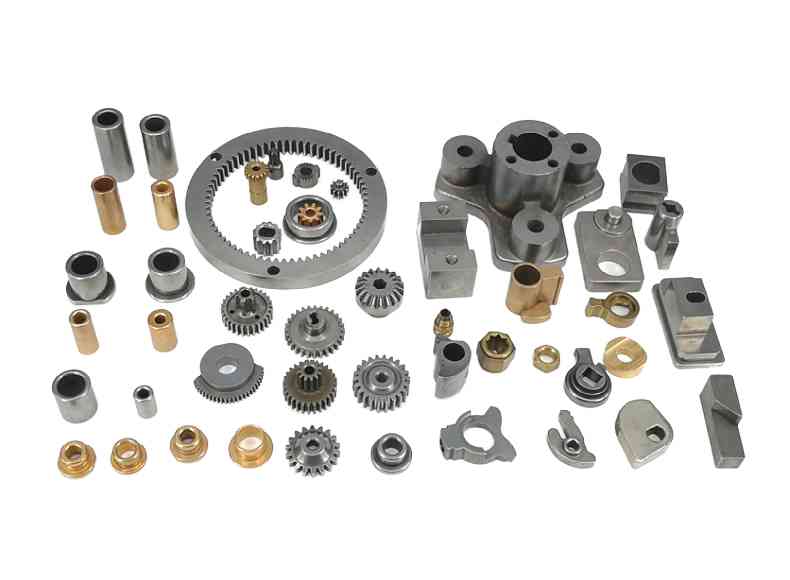
Powder Metallurgy:
Metal powder is pressed into shape and then sintered at high temperature to bond into a dense gear part.
Advantages: Can mass-produce complex-shaped gears with high efficiency, basically requiring no subsequent machining.
Disadvantages: Mechanical properties of the gear (such as impact resistance) are lower than those of forged parts.
Applications: Gears in home appliances, office equipment, small power tools, etc.
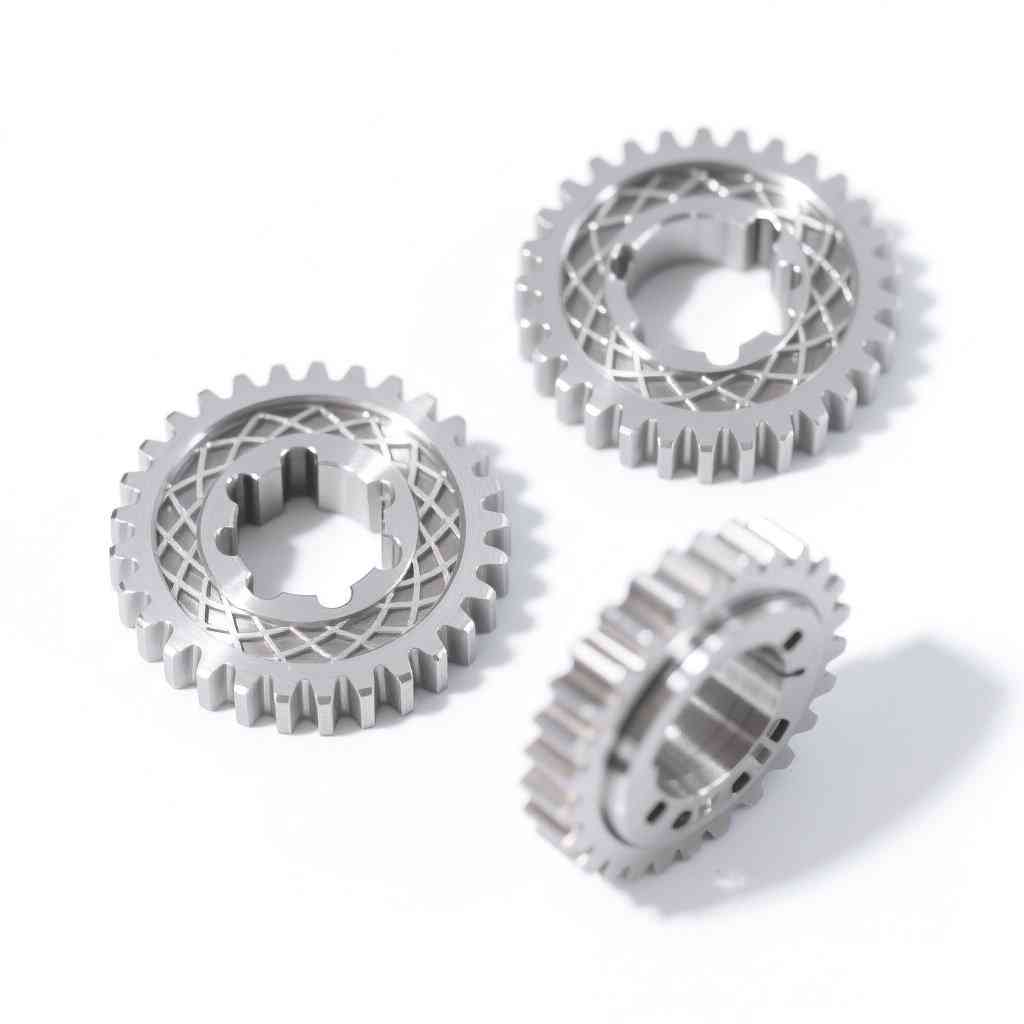
Additive Manufacturing (3D Printing):
Manufactures gears by layering materials (such as metal powder, resin).
Advantages: No molds required, can manufacture gears with special structures like complex internal cooling channels, very suitable for prototype manufacturing and small-batch customization.
Disadvantages: Surface quality and mechanical properties are usually inferior to traditional subtractive or forming processes, cost is relatively high.
How to Choose the Right Gear Manufacturing Process?
Selecting the appropriate gear manufacturing process is a comprehensive decision that requires systematic consideration based on multiple factors. For mass production of gears with high strength requirements, precision forging is an ideal choice due to its high material utilization and continuous grain flow; while powder metallurgy technology is particularly suitable for mass production of small, complex-shaped gears, enabling near-net-shape forming and significantly reducing subsequent machining. When facing high-precision requirements for hard-faced gears, the "Hobbing → Heat Treatment → Grinding" process route is typically adopted, where grinding effectively corrects heat treatment deformation, ensuring the gear achieves IT3-IT5 grade accuracy. For special structures like internal gears and cluster gears, shaping is an irreplaceable solution. Additionally, production cost, equipment conditions, and delivery cycle must be comprehensively considered – for small batches, form milling or wire cutting is more economical and flexible; while for mass-produced products like automotive transmission gears, the efficient combination of "Hobbing → Shaving" is often used. Therefore, the optimal process selection essentially seeks the best balance between gear performance, production efficiency, and cost control.
What Types of Gears Can Be Produced by Mechanical Machining?
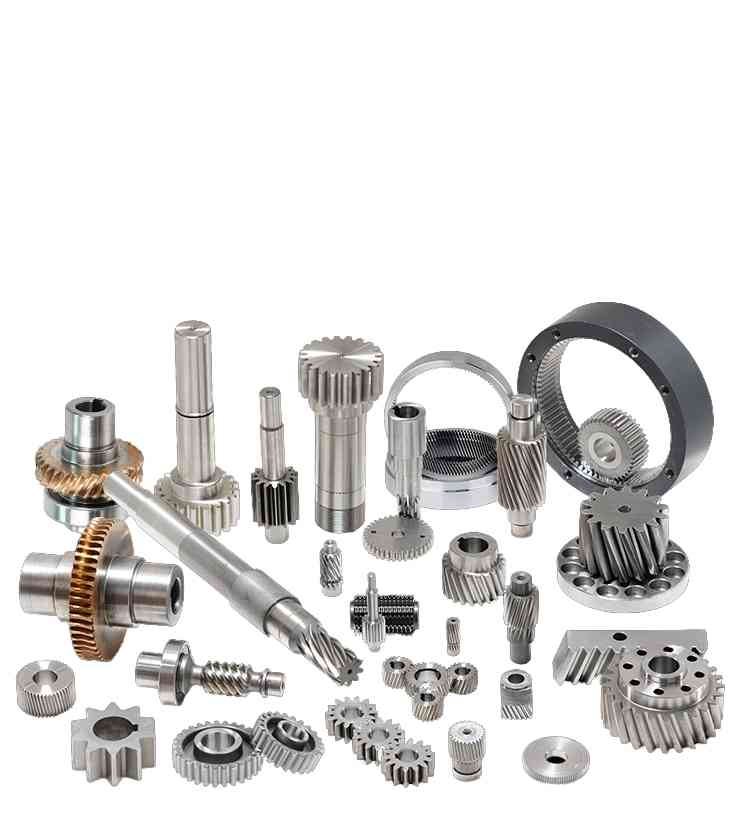
Mechanical machining technology, with its high precision, high flexibility, and powerful processing capabilities, can produce a wide variety of gears to meet various operational needs. The following are the main types of gears that can be produced through mechanical machining:
Parallel Axes Gears: Used for transmission between two parallel shafts.
Spur Gear: Simple gear with tooth lines parallel to the axis. Simple machining, low cost, but transmission is not smooth, prone to impact and noise. Suitable for low-speed, light-load applications.
Helical Gear: Gear with helical tooth lines. Machined by hobbing or milling. Smooth transmission, low noise, high load capacity, one of the most commonly used gear types in modern machinery. But generates axial thrust, requiring thrust bearings.
Double Helical Gear (Herringbone Gear): Composed of two helical gears with opposite helix angles. Machined by specialized machine tools or combined processing. Self-canceling axial thrust, very high load capacity, but difficult and costly to manufacture. Mainly used in heavy machinery, such as ship propulsion systems, rolling mills.
Rack: Can be regarded as a cylindrical gear with an infinite diameter. Machined by milling or planing. Used to convert rotary motion into linear motion, commonly found in machine tool table drives.
Intersecting Axes Gears: Used for transmission between two intersecting shafts, usually at 90 degrees.
Straight Bevel Gear: Bevel gear with straight tooth lines. Machined by planing or milling. Relatively simple manufacturing, but load capacity and transmission smoothness are inferior to curved tooth bevel gears.
Spiral Bevel Gear: Bevel gear with spiral tooth lines. Smother transmission than straight bevel gears.
Curved Tooth Bevel Gear: Includes Hypoid Gears and Spiroid Gears. Machined by specialized machine tools like Gleason or Oerlikon systems. Extremely smooth transmission, low noise, high load capacity, core components in automotive rear axle differentials and helicopter transmission systems. Highest machining difficulty and cost.
Non-parallel, Non-intersecting Axes Gears: Used for transmission between two shafts that are neither parallel nor intersecting.
Worm and Worm Wheel: Transmission through the meshing of a worm (similar to a screw) and a worm wheel. The worm is typically machined by turning or whirl milling, and the worm wheel by hobbing. Can achieve very large single-stage transmission ratios, smooth transmission, low noise, and has self-locking capability. But efficiency is low, prone to heating. Widely used in lifting equipment, machine tool indexing mechanisms.
Crossed Helical Gears: Two helical gears meshing in space with crossed axes. Machined by hobbing. Point contact, low load capacity, mainly used for motion transmission rather than high power.
In summary, modern mechanical machining technology (especially CNC hobbing, shaping, grinding, etc.) can produce almost all theoretical types of gears. The choice of gear type depends on specific transmission requirements (speed, torque, direction), space constraints, performance requirements (noise, efficiency, service life), and cost budget. From the most common involute cylindrical gears to high-precision spiral bevel gears and worm wheels, mechanical machining provides engineers with a solid foundation for realizing various complex transmission solutions.
Frequently Asked Questions (FAQ)
Q: What is the minimum module achievable in gear machining?
A: Using precision machining technology, the minimum module can reach below 0.1, meeting the needs of micro-transmissions in instruments and meters.
Q: How long does a typical gear machining cycle take?
A: Depending on the complexity, it can range from a few days to several weeks, including processes like machining, heat treatment, and finishing.
Q: How to choose a gear machining supplier?
A: Factors to consider include the supplier's machining capabilities, quality control system, industry experience, and after-sales service.
Q: How are gear machining accuracy grades classified?
A: According to national standards, they are divided into 12 accuracy grades, with grade 1 being the highest and grade 12 the lowest. The appropriate grade is selected based on usage requirements.


