


Sandblasting is one of the currently popular surface treatment technologies, mainly divided into various methods such as sandblasting, plastic abrasive blasting, and bead blasting, each with its own characteristics. This article will focus on bead blasting, systematically introducing its process principles, applicable materials, and efficient application methods to help you master how to achieve ideal surface effects through this technology.
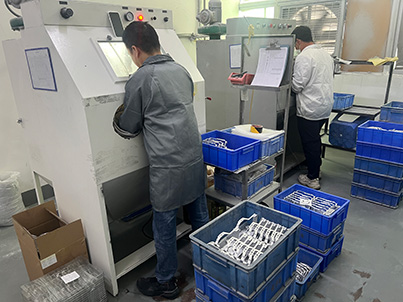
The article will provide a detailed analysis of the advantages and disadvantages of bead blasting, helping you accurately determine whether it is suitable for your needs, and providing practical tips to help you fully utilize the potential of this process and obtain excellent treatment results.
What is sandblasting?
Sandblasting is a surface treatment process that uses high-speed abrasive media to impact the surface of a workpiece to clean, roughen, polish, or alter its physical properties. It is widely used in the post-treatment of various materials such as metals, plastics, and glass.
Choosing the Right Sandblasting Surface Treatment Time
Sandblasting is a widely used surface treatment process in manufacturing, offering multiple functions such as cleaning, roughening, deburring, and surface modification. Whether it's to improve the adhesion of subsequent coatings or to improve the appearance and texture, sandblasting provides an efficient and consistent solution at both the mechanical and visual levels.
Sandblasting is your ideal choice in the following scenarios:
The surface has residual swirl marks, scratches, or dents after processing, and a uniform and smooth final finish is required.
For products with appearance requirements, such as automobiles and consumer goods, consistent texture and gloss are needed.
Rust, oxide layers, or old coatings need to be removed quickly while avoiding damage to the substrate.
Burrs generated during machining or molding must be removed to ensure safe operation and smooth assembly.
The surface needs to be pre-treated to improve the adhesion of subsequent processes such as painting, powder coating, and electroplating.
Mechanical parts (such as medical devices and precision instruments) need to be satin-finished to cover defects and present a clean and professional appearance.
Before welding or bonding, the workpiece surface requires thorough cleaning and activation treatment.
In functional applications such as anti-slip and wear resistance, a uniform and controllable surface roughness is required to meet performance requirements.
Working Principle of Sandblasting Process
The basic principle of sandblasting is to achieve surface modification through mechanical impact. Driven by compressed air or centrifugal force, abrasive particles are projected at high speed onto the workpiece surface. During the impact, these abrasives create microscopic cutting and hammering effects, thereby removing surface contaminants (such as oxide layers, old coatings, or stains) and forming a uniform rough texture.
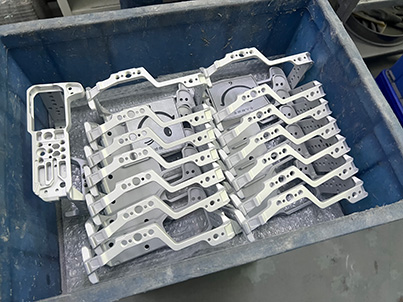
The key to this process lies in the selective removal of material from the surface: softer contaminants are removed first, while the base material itself undergoes varying degrees of morphological change depending on the process parameters. By adjusting the type of abrasive, blasting pressure, angle, and distance, different surface finishes, from matte to fine satin, can be precisely controlled. The entire process is usually carried out in a closed environment, ensuring uniform treatment and enabling abrasive recycling and dust control, making it an efficient and controllable physical surface treatment technology.
Comparison of Sandblasting with Other Surface Treatment Technologies
| Technology | Best Application Scenarios | Advantages | Limitations |
|---|---|---|---|
| Sandblasting | Metal cleaning, roughening, deburring | Adapts to complex shapes, no chemicals required | High dust control requirements |
| Chemical Etching | Precision parts, uniform texture | Uniform surface, suitable for batch processing | Uses hazardous chemicals |
| Laser Cleaning | High-precision components, artifact restoration | Extremely precise, non-contact processing | Expensive equipment, relatively slow speed |
| Polishing | Final surface brightening treatment | Achieves mirror-like finish | Cannot treat deep recesses |
| Electrochemical Treatment | Surface modification of specific metals | Allows control of surface chemical composition | Requires conductive surface |
Advantages and Disadvantages of Sandblasting
While sandblasting offers numerous advantages to manufacturing, it also has some drawbacks that need to be considered. This article will detail the various advantages and disadvantages of this process.
Efficient Cleaning Capability
It can quickly remove stubborn stains, rust, oxide layers, and old coatings, providing better results than most chemical or manual methods.
Improved Adhesion
By creating a uniformly rough surface, it significantly enhances the bonding strength of subsequent coatings (such as paint and electroplating), reducing the risk of peeling.
Wide Applicability
Suitable for a variety of materials, including metals, plastics, glass, and ceramics, and can treat complex geometric shapes or fine surface structures.
Flexible Surface Effects
By changing the type of abrasive and adjusting parameters, various surface textures such as matte, satin, and textured finishes can be achieved.
Environmental Friendliness
If environmentally friendly abrasives are used and a recycling system is in place, the use of chemical solvents can be reduced, and most abrasives can be recycled.
Disadvantages
Risk to Precision Parts
Excessive sandblasting may lead to deformation of thin-walled parts or dimensional deviations in precision parts; therefore, process parameters must be strictly controlled.
Dust and Noise Issues
The process easily generates dust (especially with abrasives such as quartz sand), requiring professional dust removal equipment and protective measures; it is also accompanied by high noise levels. Surface Embedding Risk
Some brittle abrasives may shatter and become embedded in soft substrates (such as aluminum and plastics), affecting subsequent processing or product performance.
Equipment and Consumable Costs
Industrial-grade sandblasting equipment requires a high initial investment, and there are ongoing costs for abrasive materials.
Operational Skill Requirements
Sandblasting results are highly dependent on the operator's experience; improper parameter settings can easily lead to uneven processing or excessive damage.
Applications of Sandblasting
Sandblasting, as a highly efficient and versatile surface treatment process, provides a uniform and controllable surface finish to materials with minimal impact on part dimensions. Compared to other treatment methods, it is less corrosive and therefore suitable for a variety of materials, including metals, plastics, and composite materials. It is widely used to improve the durability and performance of components.
This process offers excellent flexibility, allowing for the selection of different sizes of abrasive media based on processing requirements. For example, small abrasive beads are suitable for lightweight components requiring high surface precision; medium-sized beads effectively treat metals such as stainless steel and aluminum, covering minor surface defects; while large abrasive beads are more suitable for deburring and improving surface roughness in areas such as metal castings and automotive parts
Typical applications of sandblasting include:
Shot peening: Widely used in firearm manufacturing and high-load metal components to improve fatigue strength (studies show fatigue strength can be increased by up to approximately 17.14%) and enhance the adhesion of subsequent coatings.
Surface cleaning: Efficiently removes paint, rust, scale, and calcium deposits.
Deburring and finishing: Removes machining burrs from edges and improves appearance.
Surface activation and preparation: Surface pretreatment before painting or powder coating of materials such as stainless steel, aluminum, and cast iron.
Functional polishing: Improves the surface condition of materials, enhancing their visual and tactile texture.
Common items requiring sandblasting include:
Automotive parts requiring repainting
Surface treatment of aircraft parts before painting
Functional enhancement of firearms and other military equipment
Surface cleaning and activation of medical aluminum components
Maintenance and refurbishment of various lamp posts and other outdoor metal structures
This process offers significant value in improving product performance, extending service life, and enhancing appearance, making it an indispensable surface treatment method in many industries.
Wsrcnc High-Quality Precision Finishing Services
As a sandblasting solution expert with 12 years of industry experience, Wsrcnc is committed to providing cost-effective surface treatment services to customers in various fields. We have extensive experience in material processing and comprehensive surface treatment capabilities, including a variety of professional treatment solutions such as metal plating. Our technical team will work closely with you throughout the entire process, gaining a deep understanding of your specific needs and tailoring a metal surface treatment process that perfectly matches your product characteristics. Through this professional and personalized service system, we ensure that we provide you with reliable, high-quality solutions that fully meet your customized requirements.
Frequently Asked Questions
Q1: Does sandblasting change the dimensions of the part?
A: Yes, but the effect is usually very small (micrometer level). For precision parts, the sandblasting time and pressure need to be controlled, and process validation is required.
Q2: Can plastic parts be sandblasted?
A: Yes, but softer abrasives (such as plastic particles or glass beads) should be used, and the pressure should be reduced to avoid surface damage.
Q3: What is the difference between sandblasting and shot peening?
A: Sandblasting focuses on surface cleaning and roughening, while shot peening creates a compressive stress layer on the metal surface through higher intensity impact, mainly used to improve fatigue strength.
Q4: How to control the dust generated by sandblasting?
A: Use enclosed sandblasting equipment, equip with a dust removal system, have operators wear dust masks, and prioritize the use of low-dust abrasives (such as aluminum oxide instead of quartz sand).


