


Zinc die casting and aluminum die casting are two of the most widely used precision die casting processes in industrial manufacturing. Both utilize high pressure to inject molten metal into precision steel molds, thereby mass-producing high-quality, complex-shaped metal parts. However, due to fundamental differences in the physicochemical properties of zinc and aluminum alloys, these two processes also differ significantly in processing characteristics, part performance, cost, and application scenarios. As a professional precision manufacturing company with extensive experience in die casting and CNC machining, WSRCNC has mastered the complete process technology of both zinc and aluminum die casting, providing customized die casting solutions for the automotive, electronics, hardware, and consumer goods industries. This article will comprehensively compare zinc and aluminum die casting from aspects such as core material properties, process characteristics, part performance, cost, and typical applications, helping you accurately select the most suitable die casting process for your project.
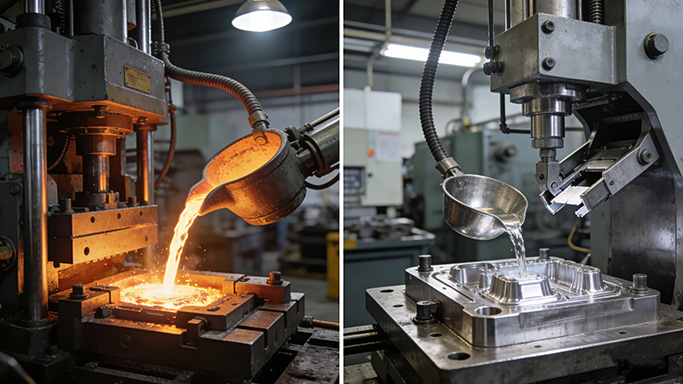
Differences Between Zinc Die Casting and Aluminum Die Casting
Although both zinc and aluminum die casting belong to high-pressure die casting processes, they differ significantly in material properties, process details, cost, and application areas. The table below clearly summarizes their main differences:
| Feature Dimension | Zinc Die Casting | Aluminum Die Casting |
|---|---|---|
| Core Material | Zinc alloy (common grades: Zamak 3, Zamak 5) | Aluminum alloy (common grades: ADC12/A380, A360, A413) |
| Physical/Mechanical Properties | High density (~6.7 g/cm³), high strength, high hardness, good wear resistance, easy electroplating. | Low density (~2.7 g/cm³), high specific strength, lightweight, good thermal/electrical conductivity. |
| Process Characteristics | Low melting point (~385°C), excellent fluidity, capable of casting parts with the thinnest wall thickness (0.5mm), the most complex shapes, and the highest precision (±0.05mm), with extremely long mold life (>1 million cycles). | Higher melting point (~660°C), good fluidity, capable of casting thin-walled parts (typically >1.0mm), high precision (±0.1mm), with relatively long mold life (approximately 100,000-500,000 cycles). |
| Production Cost | High per-part material cost (due to high density), low mold and processing costs (minimal damage to molds, easy to machine). | Low per-part material cost (due to low density), high mold and energy costs (high temperature, strong corrosiveness, high demands on molds). |
| Surface and Post-Processing | Optimal surface quality, capable of achieving a mirror-like finish directly, highly suitable for various electroplating (chrome plating, nickel plating, etc.). | Good surface quality, but typically requires processes like polishing, sandblasting to achieve high smoothness. Requires special pre-treatment before electroplating; anodizing is its advantage. |
| Typical Application Areas | Focuses on appearance, precision, and wear resistance for small, complex parts: • Bathroom hardware (faucet handles, decorative pieces) • High-end consumer goods (zipper pulls, belt buckles, jewelry) • Precision gears, lock components • Automotive interior parts (door handles, emblems) | Focuses on lightweighting, heat dissipation, and structural strength for medium to large parts: • Automotive structural parts (engine blocks, transmission housings, brackets) • Electronic device housings and heat sinks (laptop mid-frames, LED lamp housings) • Power tool housings • Furniture and mechanical equipment structural parts |
When Should You Choose Zinc Die Casting?
Zinc die casting (zinc alloy die casting) is a manufacturing process that rapidly shapes complex, high-precision parts by injecting molten zinc alloy into a precision mold under high pressure. It offers significant advantages in specific applications. The following are the timing and reasons for choosing zinc die casting:
Need for High Precision and Thin-Wall Parts
Zinc alloy offers excellent fluidity, allowing it to fill the finest details in a mold. It is suitable for producing parts with complex structures, thin walls as fine as 0.5mm, and high dimensional accuracy (up to ±0.05mm).
Medium to High Volume Production (Typically >5,000 pieces)
While die-casting molds have relatively high costs, these expenses can be significantly amortized per unit in large-volume production. This makes it suitable for mass manufacturing in industries such as automotive, electronics, and consumer goods.
Requirement for High Strength and Durability
Zinc alloys (e.g., ZA-8, ZAMAK series) exhibit high tensile strength (up to 358 MPa). Their wear resistance and impact resistance are superior to many engineering plastics, making them suitable for parts that endure mechanical stress.
Need for Excellent Surface Quality
Die-cast parts feature high surface smoothness (Ra 0.8-1.6 μm). They can be directly plated, painted, or undergo other surface treatments (such as chrome, nickel, gold, or silver plating), making them common for appearance components.
Requirement for Fast Production Cycles
The die-casting cycle is short (typically seconds to tens of seconds), making production efficiency far superior to sand casting, machining, or injection molding (for parts of comparable complexity).
Desire to Consolidate Multiple Parts into One
Complex geometric shapes can be formed in a single operation, reducing assembly steps and lowering overall costs (e.g., heat sinks, lock housings, connector shells).
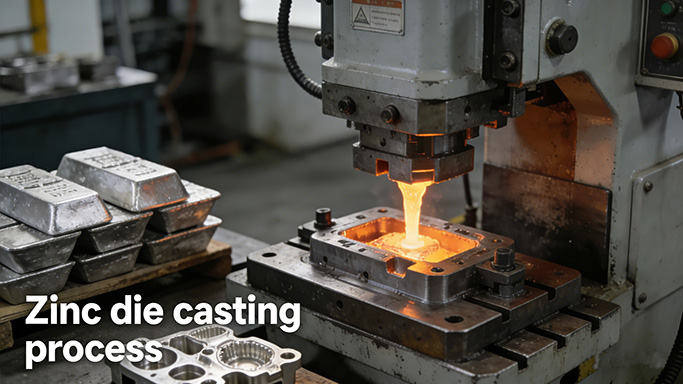
Advantages of Zinc Die Casting
Excellent Material Properties
Zinc alloy has a low melting point (approximately 385°C), resulting in lower energy consumption compared to aluminum and magnesium die casting. It offers high hardness (Brinell hardness 80–100), excellent wear resistance, and possesses good electrical and thermal conductivity.
High Cost-Effectiveness
Although the raw material cost of zinc is higher than that of aluminum, its superior fluidity allows for the use of thinner wall sections, reducing material consumption. Die-casting molds for zinc have a long service life (up to millions of cycles), making long-term production more economical.
Strong Dimensional Stability
Zinc die-cast parts exhibit low cooling shrinkage (approximately 0.7%) and minimal deformation, making them suitable for precision components that require high dimensional stability, such as gears and camera parts.
Environmental Friendliness and Recyclability
Zinc alloy can be 100% recycled, with scrap and used parts being remeltable, aligning with sustainable manufacturing trends.
Design Flexibility
Zinc die casting supports insert molding (e.g., embedding threaded sleeves or magnets) and enables the creation of complex internal structures (such as reinforcing ribs or snap-fits), reducing the need for secondary machining.
When should you choose aluminum die casting?
Need for High Precision and Thin-Wall Parts
Zinc alloy has excellent fluidity, enabling it to fill the finest details in molds. It is suitable for producing parts with complex structures, wall thicknesses as thin as 0.5mm, and high dimensional accuracy (up to ±0.05mm).
Medium to High Volume Production (Typically >5,000 Pieces)
Although die-casting molds are relatively costly, the unit cost can be significantly reduced in large-scale production. This makes it suitable for mass manufacturing in industries such as automotive, electronics, and consumer goods.
Requirement for High Strength and Durability
Zinc alloys (e.g., ZA-8, ZAMAK series) offer high tensile strength (up to 358 MPa), with wear and impact resistance superior to many engineering plastics. They are ideal for parts subjected to mechanical stress.
Need for Excellent Surface Quality
Die-cast parts feature high surface smoothness (Ra 0.8-1.6 μm) and can be directly plated, painted, or undergo other surface treatments (such as chrome, nickel, gold, or silver plating), making them commonly used for appearance-critical components.
Requirement for Fast Production Cycles
The die-casting cycle is short (typically ranging from seconds to tens of seconds), offering production efficiency far superior to sand casting, machining, or injection molding (for parts of comparable complexity).
Desire to Consolidate Multiple Parts into One
Complex geometric shapes can be formed in a single operation, reducing assembly steps and lowering overall costs (e.g., heat sinks, lock housings, connector shells).
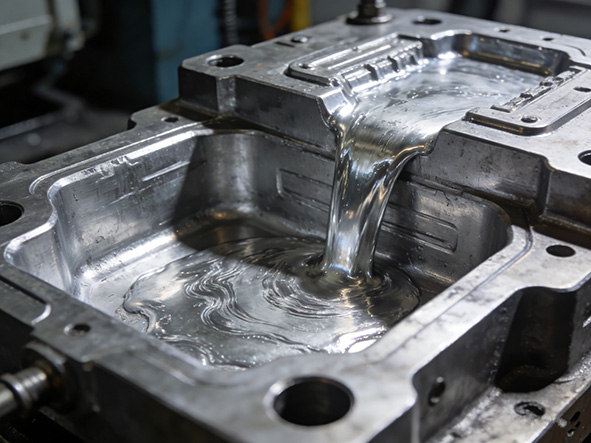
What are the core advantages of aluminum die casting?
Combination of Lightweight and Strength
It offers high specific strength (strength-to-weight ratio), significantly reducing weight while maintaining structural integrity. This is a key technology for achieving energy savings and emission reduction, especially in the automotive industry.
Excellent Comprehensive Physical Properties
Good thermal and electrical conductivity: An ideal choice for thermal management and electromagnetic shielding applications.
Non-magnetic: Suitable for the electronics and precision instrument fields.
Stable high-temperature performance: Its performance degradation in elevated temperature environments is far less than that of zinc alloys.
Outstanding Surface Treatment Capability
In addition to conventional painting and powder coating, anodizing is a unique advantage of aluminum, providing decorative, protective, and functional surfaces.
Good Economic Efficiency and Machinability
The cost of raw materials (aluminum ingots) is relatively stable and lower than that of zinc. Die-cast blanks are easy to precision machine with CNC to achieve high-precision features.
Sustainability and Recyclability
Aluminum alloy can also be 100% recycled and reused, with the energy consumption for recycling being only about 5% of that for primary aluminum production, offering significant environmental benefits.
Aluminum Die Casting vs. Zinc Die Casting: Quick Decision Guide
| Feature / Requirement | Prefer Aluminum Die Casting | Prefer Zinc Die Casting |
|---|---|---|
| Weight | Extremely sensitive, requires lightweighting | Not sensitive, heavier weight acceptable |
| Operating Temperature | > 120°C, high-temperature environment | < 120°C, room temperature environment |
| Strength / Hardness | High strength-to-weight ratio, medium hardness | Extremely high tensile strength & hardness |
| Surface Treatment | Requires anodizing or complex colors | Requires high-gloss plating, simple painting |
| Wall Thickness & Precision | Medium wall thickness (generally >1.0mm), good precision | Ultra-thin walls (<0.5mm), ultra-high precision |
| Fluidity / Complexity | Medium complexity structures | Extreme complexity, fine details |
| Mold Life | Medium (hundreds of thousands of cycles) | Very long (over 1 million cycles) |
| Unit Cost Driver | Material cost, lightweighting premium | Mold life, production efficiency, reduced secondary processing |
| Typical Applications | Automotive structural parts, heat sinks, motor housings, laptop cases | Door hardware, precision gears, connectors, high-end decorative parts |
wsrcnc’s Core Advantages in Zinc & Aluminum Die Casting
As a professional precision manufacturing enterprise integrating die casting, CNC machining, and surface treatment, wsrcnc has established a complete production system for both zinc and aluminum die casting, equipped with advanced die casting equipment (80–1000 ton cold/hot chamber machines), 5-axis CNC machining centers, and professional surface treatment lines (anodizing, plating, powder coating). Our die casting business has the following core advantages, providing global customers with one-stop die casting solutions from mold design to finished produ
Choosing the right die casting process is the key to improving product quality, reducing production costs, and accelerating market launch. Whether you need zinc die casting for complex electronic parts or aluminum die casting for lightweight automotive components, wsrcnc has the professional technical strength and rich project experience to provide you with customized, high-quality, and cost-effective die casting solutions.


